Direct answer: How to create service level expectations for maintenance teams is best understood through practical risk control, clear documentation, and maintenance decisions that match the building’s real operating conditions. This guide explains how to evaluate the issue without overstating performance, cost, schedule, or code assumptions.
TL;DR: For maintenance service levels, focus on risk, evidence, responsible ownership, and a documented next action. Use credible standards and professional review where the decision affects safety, compliance, durability, or occupied building operations.
Article context: Cluster: Facilities Management & Routine Maintenance. Content type and audience: Intermediate readers at the top of funnel stage.
Service levels turn vague urgency into operating rules
Service level expectations help maintenance teams decide what gets handled immediately, what can wait, and what requires planned work instead of reactive effort. The goal is to replace vague urgency with practical operating rules that protect safety, business continuity, occupant comfort, and asset life.
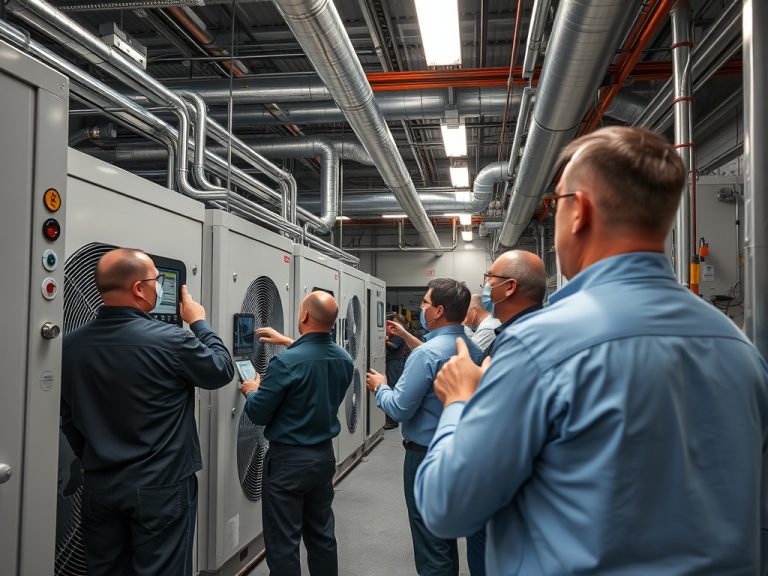
The first decision is asset criticality. A failed light in a storage room does not carry the same consequence as a failed sump pump, an inoperable access door, a roof leak above electrical equipment, or a cooling issue in a critical space. Facility management standards such as ISO 41001 focus on effective service delivery that supports organizational needs, which is the same logic behind service levels.
Define asset criticality before response times
Service levels should define request categories, expected response windows, communication steps, escalation rules, and what counts as completion. Completion is not always “fixed.” It may mean made safe, diagnosed, temporarily stabilized, quoted, assigned to a specialist, or scheduled for capital repair.
A useful system separates emergency, urgent, routine, planned, and project work. Emergency work usually involves life safety, security, active water release, major equipment failure, or risk of property damage. Routine work may include comfort complaints, minor repairs, inspections, and noncritical adjustments. Planned work includes recurring maintenance and known repairs that need materials, shutdowns, or coordination.
| Decision point | What to check | Why it matters |
|---|---|---|
| Risk | Safety, service continuity, water, access, or comfort consequences | Sets the urgency and escalation path. |
| Evidence | Photos, logs, measurements, trends, and field observations | Prevents guesswork and supports better scope decisions. |
| Responsibility | Owner, facility team, contractor, designer, or specialist | Keeps handoffs from becoming assumptions. |
| Follow-up | Monitoring, repair, replacement, or professional review | Turns findings into a practical next action. |
Set categories people can actually follow

Measurement should focus on outcomes and communication, not only speed. Fast response with poor documentation can still create repeat failures. Teams should track response time, first-visit resolution where appropriate, backlog age, repeat calls, deferred work, and customer communication quality. GSA guidance on building operations and maintenance reinforces the idea that post-construction performance depends on organized operation, not only completed projects.
Measure behavior, not only completion counts
Common mistakes include promising the same response time for every request, letting influential occupants bypass the system, failing to distinguish temporary fixes from permanent repair, and ignoring specialty assets. Interior systems, for example, may look simple but still need defined expectations for glass alignment, door hardware, seals, and safety concerns through interior glazing maintenance.
Exterior and moisture-related issues also need escalation paths. A roof-edge leak or balcony waterproofing concern should not sit in a generic queue if it can affect interiors, structure, or occupant safety. Teams that understand parapet wall failure signs and waterproofing details can set smarter triggers.
A working model for clearer maintenance promises
This article is for informational and educational purposes only. It is not legal, engineering, safety, or compliance advice. Service levels should be tailored to the facility type, staffing model, contracts, and local requirements.
Planning notes that keep maintenance service levels practical
Good maintenance and construction writing should not make a reader feel that every issue needs the most expensive solution. For maintenance service levels, the better approach is to sort the condition by consequence, evidence, and reversibility. A low-consequence issue can usually be monitored with a clear trigger for action. A high-consequence issue, especially one tied to safety, water intrusion, occupied operations, or critical systems, deserves faster review and better documentation.
Budget pressure should also be handled honestly. Some findings justify immediate corrective work, while others belong in a planned capital cycle. The difference should be explained with plain evidence: photos, trend data, inspection notes, operating history, manufacturer instructions, and the effect on occupants or service continuity. That makes the recommendation easier to review and less dependent on personality or urgency.
A practical plan also names the owner of the next step. If the item needs monitoring, say who will monitor it and how often. If it needs a proposal, say what scope assumptions must be verified. If it needs professional review, state why routine maintenance is not enough. This discipline reduces confusion between maintenance, repair, design, and capital planning responsibilities.
Finally, teams should close the loop after action is taken. Confirm that the repair, inspection, adjustment, or replacement solved the original problem rather than simply closing the work order. Where the same condition returns, treat it as a signal that the first scope may have addressed the symptom rather than the cause.
Field-ready takeaway for maintenance service levels
- Create asset criticality categories before setting response times.
- Define emergency, urgent, routine, planned, and project work.
- Clarify what “complete” means for each request type.
- Track repeat issues and communication quality, not only closure speed.
- Review service levels quarterly with operations and occupants.
Use this checklist as a starting point for discussion with the right facility, design, safety, or construction professional. It should be adapted to the asset, occupancy, local requirements, and contract responsibilities before being used as a work instruction.