
The best fat-loss plan for a busy beginner is not the most aggressive plan. It is a simple system you can repeat on workdays: a modest calorie deficit created through food choices and activity, regular strength training, enough sleep, and a small set of default meals that reduce daily decisions.
TL;DR: Start with consistency before precision. Plan a few repeatable meals, keep protein and produce in the pattern, schedule short strength sessions, increase everyday movement, and track weekly trends. The NIDDK guidance on eating and activity for weight management emphasizes a healthy eating plan you can maintain over time alongside regular physical activity.
Step 1: Build a Plan That Fits Your Worst Normal Week
Do not design your fat-loss routine around the week when work is quiet, the kitchen is stocked, and motivation is high. Design it around the week when meetings run late and you have limited time. If the plan still works then, it is far more likely to last.
Begin with a minimum version: two or three short resistance-training sessions, a realistic daily movement target, and a simple meal framework. You can add detail later. For beginners, the first objective is learning which behaviors are controllable and repeatable.
Step 2: Create Three Default Meals and Two Backups
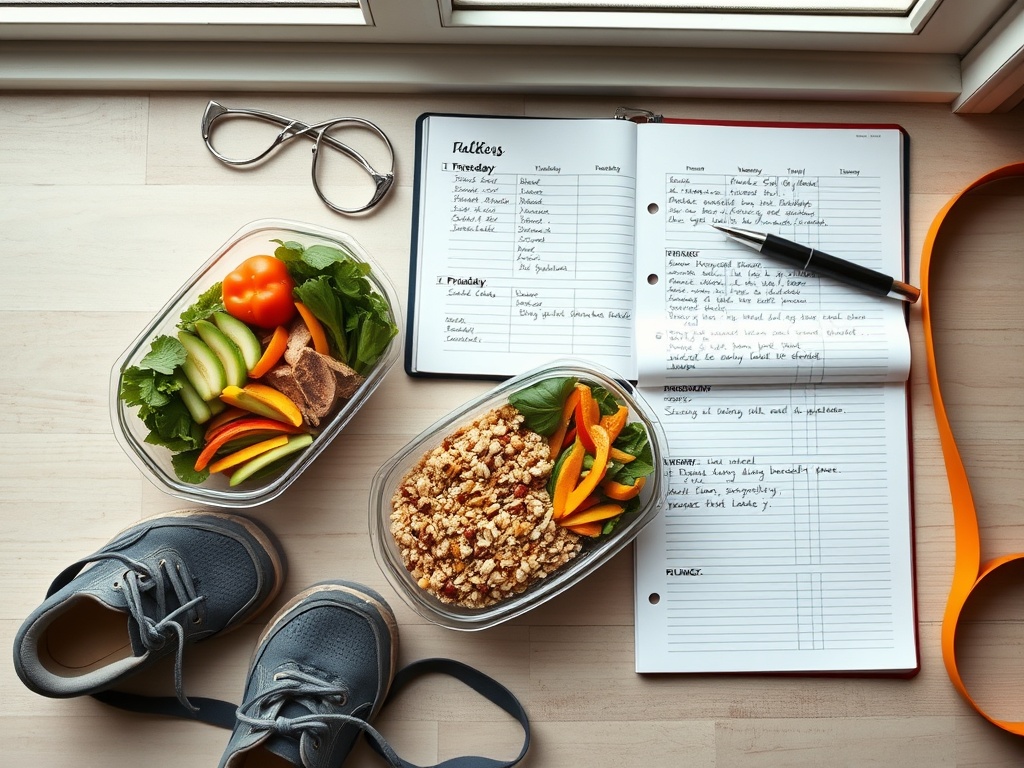
A default meal is not a mandatory menu. It is the option you choose when you do not want to think. A breakfast might combine a protein-rich food, fruit, and a high-fiber carbohydrate. Lunch might be a grain or potato bowl with vegetables and a protein source. Dinner might be a protein source, two vegetables, and a starch portion that matches your hunger and activity.
Backups matter even more than ideal meals. Keep fast options such as frozen vegetables, canned beans, eggs, yogurt, pre-cooked grains, rotisserie chicken if you eat meat, tofu, or a nutritionally reasonable frozen meal. If you eat vegetarian, high-protein vegetarian meal ideas gives you multiple protein bases so convenience does not mean eating the same thing every day.
Step 3: Use Portions and Patterns Before Complex Tracking
Calorie tracking can be useful, but it is not the only way to create structure. A beginner can first improve meal composition and portion awareness: include protein-rich foods, favor minimally processed high-fiber foods, reduce frequent liquid calories, and make highly palatable snack foods less automatic. If progress stalls after several consistent weeks, more precise tracking may help identify where energy intake is higher than expected.
The CDC explains that a calorie deficit is required for weight loss, while also noting that physical activity contributes to health and weight maintenance. This distinction matters because trying to “exercise off” every meal can create a frustrating cycle. Food intake and activity should work together rather than operate as punishment and compensation.
Step 4: Strength Train on a Minimum Effective Schedule
Strength training supports function and helps preserve muscle while body weight changes. Two or three full-body sessions can be more realistic for a busy beginner than a five-day body-part split. Use a small number of movements: a squat or sit-to-stand pattern, a hinge, a push, a pull, and an optional carry or trunk exercise. Machines, dumbbells, resistance bands, and bodyweight can all work.
Progress by adding repetitions, resistance, range of motion, or better technique gradually. You do not need to finish every session exhausted. Preserving a consistent resistance-training signal matters more than turning every lifting session into high-speed cardio.
Step 5: Make Movement Easy to Accumulate
Walking is practical because it requires little setup and can be split across the day. Short walks after meals, parking farther away, taking stairs when appropriate, walking during calls, or using active errands can raise total movement without requiring a separate long workout. If walking is not appealing, cycling, swimming, dance, or active hobbies can fill the same role.
Do not jump from very little activity to a large daily target because a social-media challenge says you should. Increase gradually enough that feet, joints, sleep, and energy remain manageable. If fitting movement into the day is the main barrier, routine anchors for daily movement and healthy eating can help you connect short activity to events that already happen.
Step 6: Track the Trend, Not the Drama
Body weight can move up or down because of sodium, carbohydrate intake, digestion, menstrual-cycle changes, travel, and other short-term factors. If you choose to weigh yourself, compare averages across weeks rather than interpreting every reading. Also track waist measurements, how clothes fit, training performance, energy, hunger, sleep, and adherence.
If there is no change after several weeks of genuine consistency, adjust one variable rather than restarting everything. Slightly reduce energy-dense extras, tighten portions, or add a manageable amount of activity. If progress is fast but fatigue, hunger, mood, or training quality are deteriorating, the plan may be too aggressive. If you use cardio metrics while dieting, the guide to heart rate recovery explains why standardized trends are more useful than isolated readings.
Step 7: Know When Generic Advice Is Not Enough
Weight management can intersect with medications, endocrine conditions, pregnancy, eating disorders, diabetes, kidney disease, cardiovascular disease, and other health issues. The NIDDK guide to choosing a safe weight-loss program emphasizes realistic goals, ongoing support, healthy habits, and an activity plan. People with medical complexity should use individualized clinical guidance rather than simply cutting calories further.
Your Busy-Week Fat-Loss Template
- Plan two or three repeatable strength sessions.
- Choose three default meals and two emergency backups.
- Keep convenient protein-rich foods and produce visible and available.
- Accumulate movement in small bouts instead of waiting for a perfect one-hour window.
- Review progress once per week using trends, not single-day changes.
- Change one variable at a time and give the change enough time to evaluate.
Create a Restaurant and Takeout Rule Before You Need It
Busy schedules often include restaurant meals, delivery, or workplace food. Instead of treating those meals as failures, define a default decision rule. Look for a meal with a clear protein source and vegetables, decide in advance which calorie-dense extras matter most to you, and stop trying to make every restaurant choice “perfect.” One consistent choice is easier to repeat than a complicated set of restrictions.
If portions are large, you can save part for later or share a side. If nutrition information is available and tracking is useful to you, use it as an estimate rather than assuming it is laboratory-precise. The bigger objective is keeping one restaurant meal from turning into an all-day or all-week abandonment of the plan.
Protect Sleep When Time Is Limited
Cutting sleep to create workout time is often a poor trade. Short sleep can make training feel harder and can affect appetite, mood, and decision-making. When a day is overloaded, a shorter workout plus adequate sleep may support the overall plan better than a late-night session that leaves you depleted the next day.
Make the Plan Boring Enough to Work
A busy beginner does not need a more complicated fat-loss system. You need fewer decisions, realistic training, reliable food options, and patience long enough to observe a trend. Consistency creates the data that tells you what to adjust.
Start by planning your next five workdays, not your next five months. Put two strength sessions on the calendar, choose three default meals, and identify the easiest daily movement slot. Run that version first, then improve it from experience.