
Heart rate recovery is the drop in heart rate after exercise stops or transitions into recovery. A faster decline can reflect how the autonomic nervous system and cardiovascular system respond after exertion, but the number is highly dependent on the test protocol and should not be treated as a stand-alone diagnosis from a smartwatch.
TL;DR: Measure heart rate recovery the same way each time if you want a useful personal trend. Record peak or end-of-work heart rate, then record the heart rate at a defined recovery point such as one or two minutes. Compare like with like, and do not apply a clinical cut point from one treadmill protocol to every workout or wearable.
What Heart Rate Recovery Actually Measures
During exercise, heart rate rises to help deliver oxygen and nutrients to working tissue. When the work stops, heart rate begins to fall as the body transitions toward recovery. Heart rate recovery, often abbreviated HRR, is usually expressed as the difference between the heart rate near the end of exercise and the heart rate after a specified recovery interval.
Classic clinical research defined HRR using a specific exercise-testing protocol. In a widely cited study, one-minute heart rate recovery after graded exercise was associated with mortality risk in the population studied. More recent research continues to find prognostic associations, but normal values vary with age, protocol, exercise capacity, medication use, and how recovery is performed. That context is why a single consumer-device reading should not be interpreted as a medical verdict.
Why Protocol Changes the Number
Imagine two workouts that end at the same heart rate. After the first, you stop and stand still. After the second, you keep walking slowly for a cool-down. Your one-minute heart rate may differ because the recovery conditions are different. Treadmill versus cycle testing, body position, fitness level, ambient temperature, hydration, medication, and the intensity of the final effort can also affect the response.
A 2024 study of cycle exercise testing reported age-dependent reference patterns and associations between blunted recovery measures and mortality, reinforcing the point that HRR values depend on the population and protocol. If you are tracking HRR for fitness, standardization matters more than hunting for one universal “good” number.
A Simple Way to Track HRR for Fitness Trends
1. Choose a repeatable session, such as the same steady ride, brisk incline walk, or standardized interval.
2. Use the same device and measurement method when possible.
3. At the end of the work period, note the heart rate and immediately start a timer.
4. Recover in the same way each time, such as standing still or walking slowly, but do not mix the methods when comparing results.
5. Record heart rate at the same time point, such as one minute and optionally two minutes.
6. Look for a multi-week pattern alongside pace, power, perceived effort, sleep, illness, and training load.
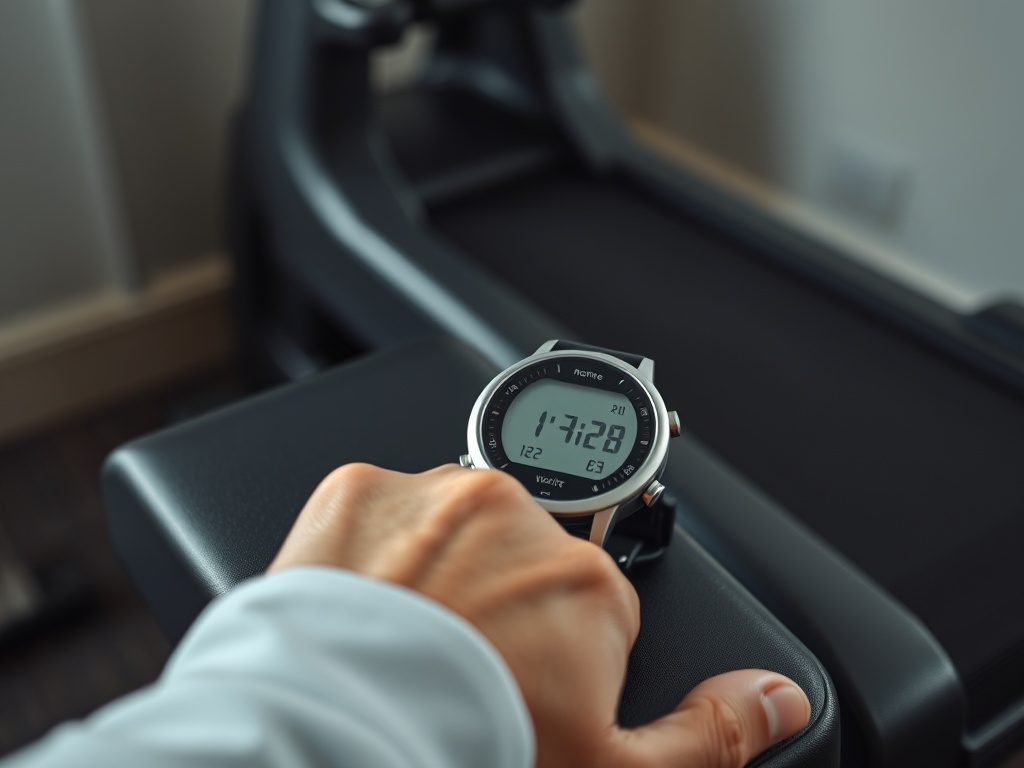
For example, if your end heart rate is 165 beats per minute and it is 138 one minute later, the one-minute drop is 27 beats per minute. That arithmetic is simple; the interpretation is not. The value only becomes useful when you know the conditions under which it was measured.
What Improvement Can and Cannot Tell You
If the same submaximal session produces a lower exercise heart rate, a larger recovery drop, or the same heart-rate response at a faster pace, that may be consistent with improving conditioning. But heart rate is influenced by many short-term factors. Heat, dehydration, poor sleep, emotional stress, caffeine, recent illness, and some medications can change the reading.
That is why HRR works best as one tool in a broader fitness dashboard. Pair it with performance measures that matter to your activity: walking pace, cycling power, rowing split, time to complete a route, perceived effort, or the ability to recover between intervals. If you are choosing equipment to standardize home cardio, the guide to treadmills, bikes, and rowers can help match a machine to the way you actually plan to train. If you are also dieting, the busy-schedule fat-loss plan explains why recovery and multi-week trends matter more than reacting to one workout metric.
Wearable Data: Useful Trend, Imperfect Measurement
Optical wrist sensors can be convenient, but their accuracy may vary with motion, fit, skin contact, device design, and the activity being performed. A chest strap may provide more stable readings during some types of exercise, but even accurate heart-rate measurement does not remove the need for context.
Treat the wearable as a consistent measuring instrument, not a cardiologist. If the device suddenly shows a very different recovery pattern, first check whether the workout, sensor fit, temperature, or recovery method changed. If the pattern is persistent or accompanied by symptoms, that is a different situation and deserves clinical attention.
When HRR Should Prompt More Than Fitness Tracking
Seek medical evaluation rather than self-interpreting HRR if exercise triggers chest pressure, fainting, severe or unusual shortness of breath, palpitations with dizziness, or other concerning symptoms. People with known cardiovascular disease, significant risk factors, or medications that alter heart rate should also ask their clinician how useful heart-rate targets and recovery metrics are for them.
The American Heart Association exercise guidance can provide general context for exercise heart rate, but individualized clinical testing uses protocols and interpretation that consumer fitness tracking cannot reproduce.
Separate Fitness Tracking From Clinical Exercise Testing
Clinical exercise tests are supervised, standardized, and interpreted alongside symptoms, electrocardiographic findings, blood pressure, medical history, medication use, and exercise capacity. A consumer workout does not reproduce that environment. This distinction matters because the same heart-rate drop can have different meaning depending on how the test ended and who was tested.
For personal fitness tracking, use HRR as a consistency metric. If the same workout feels easier, performance improves, and recovery trends are stable or improving, that can be useful feedback. If a single number looks worse after poor sleep or heat exposure, repeat the test under normal conditions before drawing conclusions. Persistent changes are more informative than isolated readings.
Should you compare your HRR with someone else?
Usually not for training decisions. Age, medications, exercise mode, peak effort, and recovery method make direct comparison noisy. Your own standardized trend is the better reference unless a clinician is using a specific validated protocol.
Use HRR as a Repeatable Signal, Not a Scorecard
Heart rate recovery can be a useful personal trend when you control the conditions and combine it with performance and recovery data. The mistake is turning a protocol-dependent metric into a universal pass-fail number. Standardize your test, watch the trend, and interpret changes in the context of the whole training picture.
For the next month, pick one repeatable cardio session and record end heart rate plus one-minute recovery once per week. Keep the method identical. If you want to support the trend with broader conditioning, a balanced activity plan is more useful than obsessing over the metric itself.