How to Clean Around a Dental Implant Without Damaging the Tissue
Cleaning around a dental implant should feel controlled, not forceful. You are trying to remove plaque from the gumline, the sides of the implant crown, and the spaces around it without repeatedly hitting the tissue, shredding the floss path, or using abrasive tools that make the area harder to maintain over time.
Daily-Care Snapshot
- The goal is gentle, consistent plaque removal around the implant and the restoration, not aggressive scrubbing.
- Cleaning tools should match the implant design and the space available, which is why professional demonstration matters.
- Repeated bleeding, bad taste, swelling, or a feeling that the implant is hard to clean are reasons to book a dental visit instead of pushing harder at home.
What makes implant cleaning different from cleaning a natural tooth
An implant may look like a tooth above the gumline, but the tissues around it are not identical to the tissues around a natural root. That is why dentists pay close attention to plaque retention, contact points, the shape of the crown, and how easily you can reach the area. The American Academy of Periodontology’s peri-implant disease guidance explains that bacteria can collect around implants and inflame the surrounding tissue, which is why daily cleaning and regular checkups matter.
The first rule is simple: do not try to “scrub away” uncertainty. If you are hitting the gum hard enough to make it repeatedly sore, using a tool that does not fit, or guessing how to get under a bridge-like implant restoration, technique matters more than effort.
A step-by-step way to clean without being rough
1. Start with the stage you are in. A healing implant with stitches or a recently uncovered implant may have different instructions from a fully restored implant crown. Follow the surgeon’s aftercare plan first.
2. Use a soft brush at the gumline. Angle the bristles gently where the crown meets the tissue and sweep plaque away rather than jabbing into the gum.
3. Clean between the implant and adjacent teeth every day. Depending on the space, your dentist may suggest floss, super floss, a threader, or an interdental brush sized to fit without force.
4. Clean the shape you actually have. A single implant crown, an implant bridge, and a full-arch prosthesis each trap debris differently, so the access path matters.
5. Pause if something repeatedly bleeds or feels impossible to reach. That may mean inflammation, an access issue, or a tool mismatch.
| Tool or approach | What it is good for | What to avoid |
|---|---|---|
| Soft manual or electric brush | Daily cleaning along the visible crown and gumline | Hard scrubbing that leaves the tissue irritated |
| Floss or super floss | Contact areas and under bridge-like contours when recommended | Snapping the floss through tight contacts or sawing aggressively into the gum |
| Interdental brush | Open spaces where the right size can sweep plaque efficiently | Using a size that forces its way through and traumatizes tissue |
| Water irrigator | Helpful for some patients as part of the routine, depending on the design and healing stage | Assuming it replaces all mechanical cleaning or using it against fresh surgical instructions |
The most common mistakes patients make
One mistake is treating implants as maintenance-free because they do not decay the way teeth do. The AAP’s implant procedures page is very clear that implants still require conscientious at-home care and regular dental visits. Another mistake is the opposite: over-cleaning with stiff tools, abrasive pastes, or so much pressure that the area stays irritated.
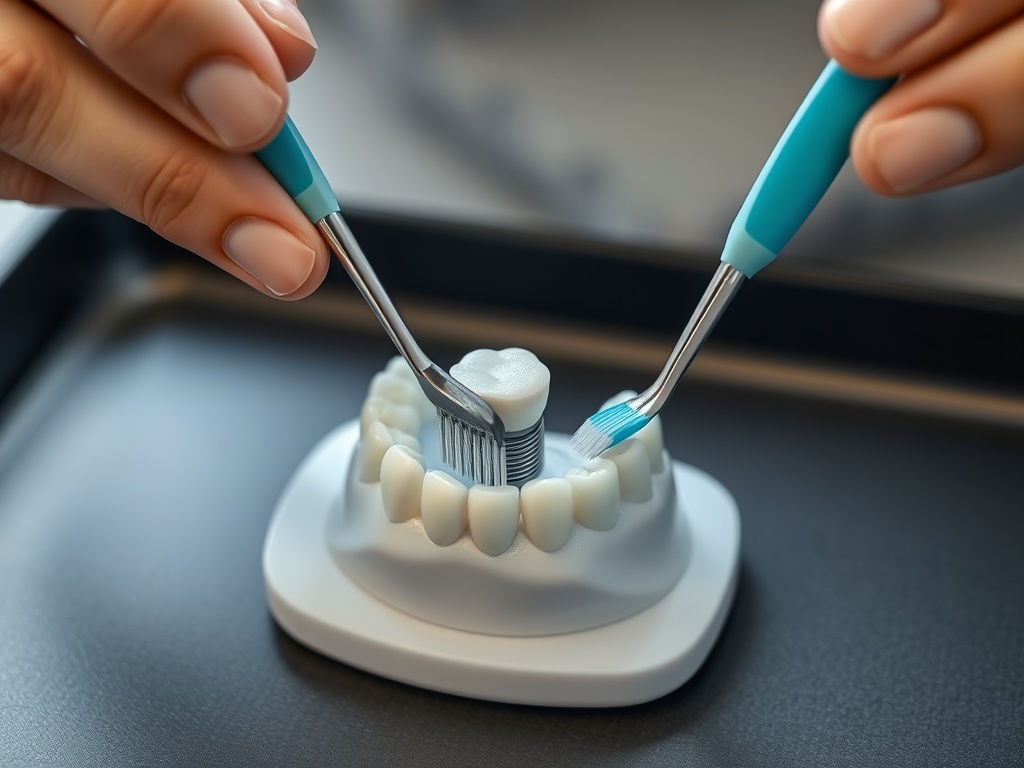
Patients also get stuck when the implant crown shape makes home care awkward. If food traps under the restoration or your floss path is unclear, do not invent a workaround for months. Ask for a hands-on demonstration. A two-minute chairside coaching session is often more useful than buying three more gadgets.
How healing stage changes the routine
Implant care is not one routine forever. The day after surgery, the goal may be protection and gentle hygiene around the site according to your surgeon’s instructions. After the final crown is placed, the focus shifts toward long-term plaque control around the visible contours, contact points, and any under-surface areas.
That is why patients should not copy someone else’s implant-cleaning routine blindly. The right method depends on whether you have one implant, several implants, a fixed bridge, or a larger full-arch prosthesis. It can also depend on how much tissue fills the space and how accessible the restoration is.
Home Care and Follow-Up for How to Clean Around a Dental Implant Without Damaging the Tissue
Home care is enough when the area feels comfortable, you can reach it consistently, and the tissue looks calm. A little extra coaching may be all you need if you are simply unsure about the angle or the tool size.
Book a dental visit if the tissue bleeds again and again, if you notice swelling or a bad taste, if the implant crown feels loose, or if the area hurts when chewing. The AAP notes that bleeding and tenderness around an implant can be signs of peri-implant disease. In other words, harder brushing is not the answer when the tissue is already signaling trouble.
Why cleaning technique affects the rest of your treatment plan
Implant maintenance is not separate from the rest of your dental plan. If the implant is hard to clean because the contacts are tight, the underside is bulky, or neighboring restorations are overdue for review, those design factors need to be discussed. Patients balancing implant care with other dental work often benefit from reading restorative dentistry timeline: what can be done in one visit vs several so maintenance is built into the sequencing, not treated as an afterthought.
And if the tissue around the implant is already inflamed, your dentist may discuss periodontal-type care around the area. That is where laser gum therapy vs traditional periodontal treatment can become relevant, because the conversation may shift from simple hygiene to how inflamed tissue is professionally managed.
Questions About Clean Around Dental Implant Without Damaging Tissue
For Clean Around Dental Implant Without Damaging Tissue, this part of Questions About Clean Around Dental Implant Without Damaging Tissue focuses on the symptom history, previous treatment, current medicines, and the result the patient values most while risks and alternatives are compared, with the same details verified before consent is finalized. The clinician should also explain which examination finding supports each recommendation and what information could change it for Clean Around Dental Implant Without Damaging Tissue when the diagnosis is confirmed, using the examination and health history rather than a general assumption.
What clean should feel like around an implant
Good implant cleaning usually feels gentle, repeatable, and boring. That is the goal. You should know how to reach the area, what the tissue normally looks like, and which changes mean you should call. As a neutral next step, ask your dentist or hygienist to watch you clean around the implant once. The best routine is the one that is both effective and easy enough to keep doing for years.
Comparing Options for Clean Around Dental Implant Without Damaging Tissue
For Clean Around Dental Implant Without Damaging Tissue, this part of Comparing Options for Clean Around Dental Implant Without Damaging Tissue focuses on benefit, limitations, durability, maintenance, timing, and total cost when home-care instructions are prepared, with the same details verified before consent is finalized. The clinician should also explain how each choice preserves tooth structure or tissue and what backup treatment may be needed for Clean Around Dental Implant Without Damaging Tissue when maintenance is discussed, using the examination and health history rather than a general assumption. Recording that explanation gives the patient a clearer next step for Clean Around Dental Implant Without Damaging Tissue when home-care instructions are prepared, especially when follow-up duties are reviewed before consent is finalized.
Timing and Recovery for Clean Around Dental Implant Without Damaging Tissue
Planning How to Clean Around a Dental Implant Without Damaging the Tissue also means discussing effects on work, school, travel, eating, driving, exercise, and caregiving responsibilities. Before scheduling How to Clean Around a Dental Implant Without Damaging the Tissue, ask how delays, missed visits, or slower healing could change comfort, cost, and the final result as the long-term result is reviewed.